
Brain and Spinal Tumours
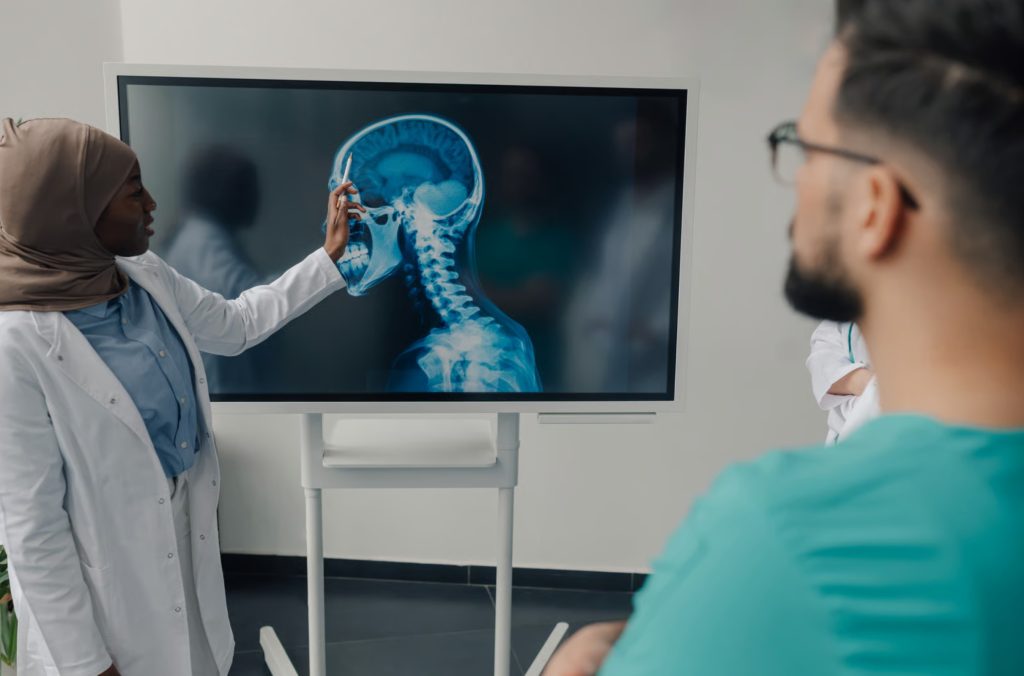
Understanding Brain and Spinal Tumours
A tumour is an abnormal growth of cells. Brain and spinal tumours may be benign (non-cancerous) or malignant (cancerous), and can originate within the nervous system (primary tumours) or spread from elsewhere in the body (secondary or metastatic tumours).
Regardless of whether a tumour is benign or malignant, its location within the brain or spinal cord means it can cause significant symptoms by pressing on delicate neural structures. Early diagnosis and expert management are essential.
Symptoms to Watch for
- New or worsening headaches, especially those worse in the morning or with coughing
- Seizures (fits) with no prior history
- Progressive weakness or numbness in the limbs
- Changes in vision, speech, or hearing
- Personality or cognitive changes
- Back pain with progressive leg weakness or bladder/bowel changes
- Difficulty with balance or coordination
How Dr Radebe can Help
Dr Radebe provides comprehensive surgical management of brain and spinal tumours. He works within a multidisciplinary team — including oncologists, radiation therapists, and pathologists — to ensure that every patient receives a coordinated and evidence-based treatment plan.
Treatment Options
- Craniotomy for Tumour Removal — open surgical removal of a brain tumour through a carefully planned opening in the skull. The goal is to remove as much of the tumour as safely possible while preserving neurological function.
- Stereotactic Biopsy — a minimally invasive procedure using precise imaging guidance to obtain a small tissue sample from a brain tumour for diagnosis, without the need for a full craniotomy.
- Transsphenoidal Surgery — a specialised approach used to remove tumours of the pituitary gland by accessing the skull base through the nose and sinuses, avoiding the need for an external incision.
- Laminectomy for Spinal Tumour Removal — removal of part of the vertebral bone to access and remove a tumour pressing on the spinal cord or nerve roots.
- Posterior Instrumentation and Fusion — stabilisation of the spine with screws and rods, often necessary after tumour removal when the structural integrity of the spine has been compromised.
- Cranioplasty — reconstruction of the skull following tumour surgery where bone was removed.
- VP Shunt (Ventriculoperitoneal Shunt) — a device implanted to drain excess cerebrospinal fluid from the brain to the abdomen, used when a tumour causes or is associated with hydrocephalus (a build-up of fluid in the brain)
All Treatments
Meet your Neurosurgeon
FAQ
Does a brain tumour always mean cancer?
No. Many brain tumours are benign, meaning they are not cancerous. However, even benign tumours can cause serious symptoms because of their location. Dr Radebe will explain the nature of your tumour and what it means for your treatment and prognosis.
What is a stereotactic biopsy?
A stereotactic biopsy uses advanced imaging (CT or MRI) to guide a needle precisely to the tumour to collect a tissue sample. It is performed through a very small opening and is used when the tumour is in a location that makes open surgery difficult or when a diagnosis is needed before planning treatment.
What happens after brain tumour surgery?
After surgery, you will be monitored closely in hospital. Depending on the type of tumour, you may need further treatment such as radiation therapy or chemotherapy, which will be coordinated by your oncology team. Dr Radebe will remain involved in your ongoing care and follow-up.
Will I lose function after brain surgery?
Dr Radebe uses advanced surgical planning and techniques to minimise the risk to healthy brain tissue. While every surgery carries some risk, the goal is always to preserve as much neurological function as possible. The specific risks will be discussed with you in detail before any operation.
What is a VP shunt and will I need one?
A VP shunt is a thin tube that drains excess fluid from the brain to the abdomen, where it is naturally absorbed. You may need one if your tumour is blocking the normal flow of cerebrospinal fluid, causing hydrocephalus. The shunt is typically permanent but requires only a minor surgical procedure to implant.
- Appointment