
Spine Degenerative Disease
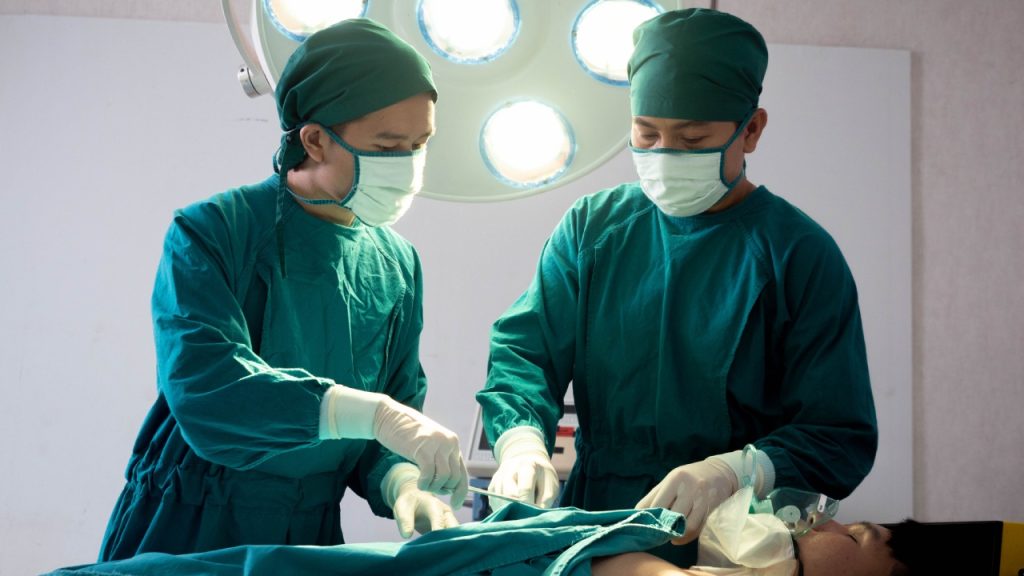
Understanding Spine Degeneration
Degenerative spinal disease refers to the gradual breakdown of the structures that make up the spine — including the intervertebral discs, facet joints, and ligaments. This is a natural part of ageing, but for some patients it leads to significant pain, reduced mobility, and nerve compression that affects daily life.
Common degenerative conditions include disc herniations (where the soft inner core of a disc pushes through its outer layer), spinal stenosis (narrowing of the spinal canal), and spondylolisthesis (where one vertebra slips forward over the one below it).
Symptoms to Watch for
- Persistent back or neck pain that worsens over time
- Pain, numbness, or tingling radiating into the arms or legs
- Weakness in the hands, arms, or legs
- Difficulty walking, clumsiness, or balance problems
- Loss of bladder or bowel control (seek urgent medical attention)
How Dr Radebe can Help
Dr Radebe will conduct a thorough clinical assessment, review your imaging, and explain your diagnosis in clear terms. Treatment is always tailored to the individual and may range from conservative management to surgical intervention, depending on the severity of your condition.
Treatment Options
Conservative and Interventional
- Facet Joint Injections — targeted injections of local anaesthetic and anti-inflammatory medication into the small joints of the spine to relieve pain and inflammation.
- Rhizotomy — a procedure that uses heat or chemical agents to disrupt pain signals from specific nerves, providing longer-term relief from facet joint pain.
- Kyphoplasty — a minimally invasive procedure to stabilise compression fractures by injecting bone cement into the affected vertebra, restoring height and reducing pain.
Minimally Invasive Surgical Options
- Endoscopic and Laparoscopic Discectomy — removal of a herniated disc fragment through a very small incision using a camera and specialised instruments, resulting in less tissue damage and faster recovery.
- Laminectomy — removal of a portion of the vertebral bone (lamina) to relieve pressure on the spinal cord or nerves. Often used to treat spinal stenosis.
- Discectomy — surgical removal of the damaged portion of a herniated disc that is pressing on a nerve root, relieving pain and restoring function.
- Laminectomy and Discectomy — a combined procedure addressing both bony compression and disc herniation in a single operation.
Spinal Fusion and Reconstruction
- ACDF (Anterior Cervical Discectomy and Fusion) — removal of a damaged cervical disc through the front of the neck, followed by fusion of the adjacent vertebrae to restore stability and relieve nerve compression.
- ACDF and Laminectomy — a combined approach using both anterior disc removal and posterior bone decompression for more extensive cervical spine disease.
- TLIF (Transforaminal Lumbar Interbody Fusion) — a spinal fusion technique performed through the back, where a damaged disc is removed and replaced with a cage and bone graft to stabilise the spine.
- TLIF with Decompression and Discectomy — combines the fusion with nerve decompression and disc removal for patients with both instability and nerve compression.
- Posterior Instrumentation and Fusion — placement of screws and rods along the back of the spine to hold vertebrae in the correct position while fusion occurs. Used for instability, deformity, or after decompression surgery.
- Posterior Instrumentation Fusion and Laminectomy — combines spinal stabilisation with decompression of the spinal canal in a single procedure.
- Posterior Instrumentation Fusion and Discectomy — combines stabilisation with disc removal for patients requiring both correction of instability and relief of disc-related nerve compression.
- Re-decompression, Instrumentation Removal and Posterior Instrumentation and Fusion — a revision procedure for patients who require further decompression after previous surgery, including removal of prior hardware and placement of new instrumentation.
All Treatments
Meet your Neurosurgeon
FAQ
Is spinal surgery always necessary for a herniated disc?
No. Many disc herniations improve with conservative treatment such as rest, physiotherapy, and pain medication. Surgery is typically recommended only when symptoms are severe, progressive, or do not respond to non-surgical management.
What is the difference between a laminectomy and a discectomy?
A laminectomy involves removing part of the vertebral bone to create more space in the spinal canal, while a discectomy removes the herniated portion of a disc. They address different sources of compression and are sometimes performed together.
How long is the recovery after spinal fusion surgery?
Recovery varies depending on the procedure and the individual. Most patients can return to light activities within four to six weeks, though full recovery and return to strenuous activity may take three to six months. Dr Radebe will provide a personalised recovery plan.
What does ‘minimally invasive’ spinal surgery mean?
Minimally invasive surgery uses smaller incisions, specialised instruments, and sometimes cameras or microscopes to perform the operation with less disruption to surrounding tissue. This generally results in less pain, less blood loss, and a shorter hospital stay.
Can degenerative spine disease come back after surgery?
Degenerative changes are a natural part of ageing and can continue to progress at other levels of the spine over time. However, surgery is designed to address the specific problem causing your symptoms, and many patients experience lasting relief. Regular follow-up with Dr Radebe helps to monitor your spinal health.
- Appointment